When space is tight or moisture is a real concern, closed-cell foam outperforms every other common insulation material. We apply it where it makes the most difference in Cape Girardeau homes.
Closed-cell foam insulation in Cape Girardeau seals air leaks, resists moisture, and delivers R-6 to R-7 per inch in a single application - most crawl space and rim joist jobs are completed in one day.
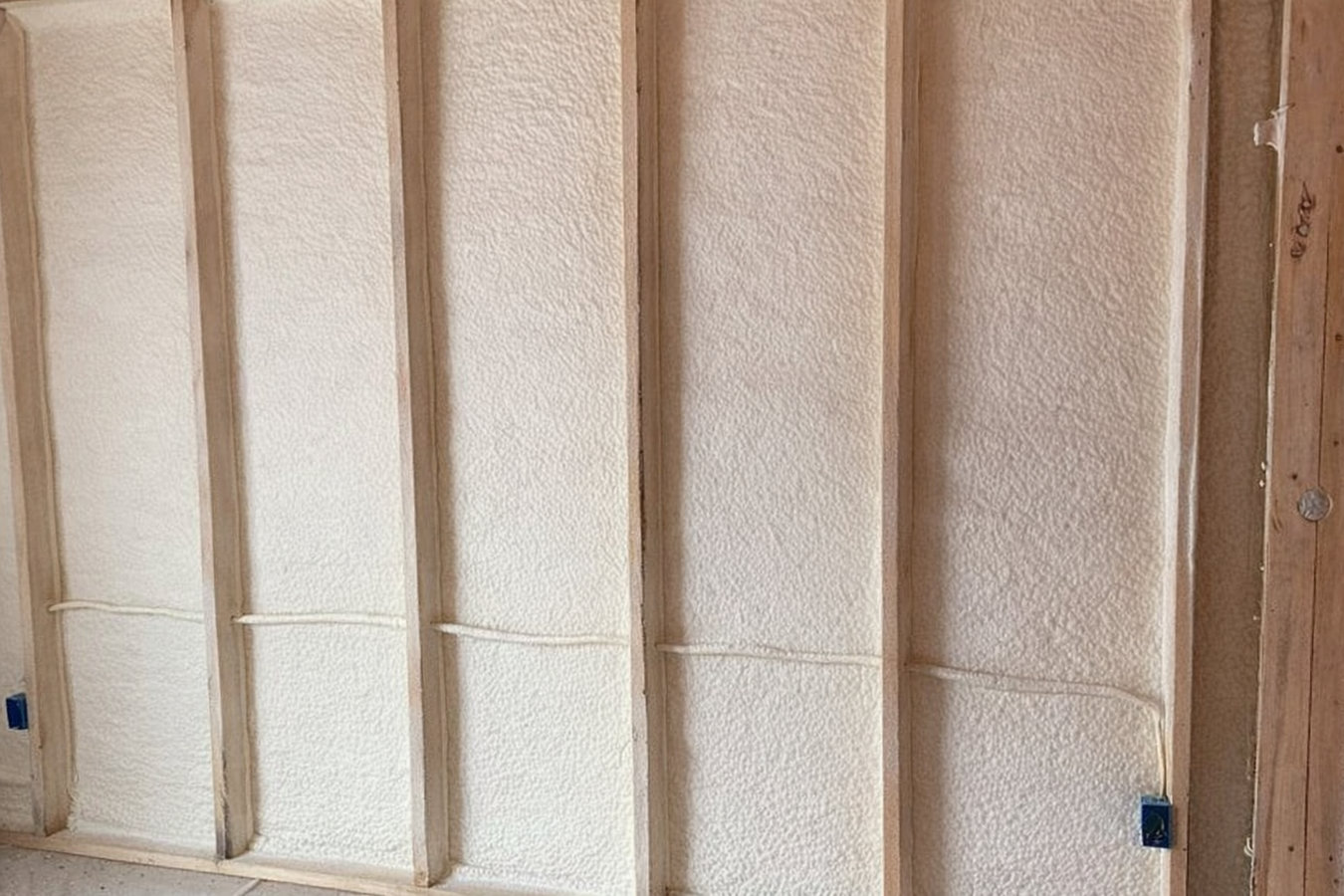
When a contractor sprays closed-cell foam, it expands and hardens into a rigid, dense layer within seconds of hitting the surface. Unlike fiberglass batts, it does not leave gaps around pipes, wires, or irregular framing. It does three jobs at once: insulates, seals air, and blocks moisture. That combination is why it is the right choice for problem spots in Cape Girardeau homes - crawl spaces that see ground moisture, rim joists exposed to outdoor air, and basement walls dealing with humidity year-round.
Not every space needs closed-cell foam. If you are also considering a broader spray foam insulation project, we will walk you through where each type makes sense and where a less expensive material would do the same job.
If your electric or gas bill jumps noticeably when Cape Girardeau's weather turns extreme - and homes of similar size nearby seem to pay less - that is a strong sign conditioned air is escaping. Unsealed crawl spaces, rim joists, and attic edges are the most common culprits in older local homes, and closed-cell foam is the right fix for all three.
If you have seen standing water, damp insulation hanging down, or dark staining on floor joists when you peek under your home, moisture is getting in. Cape Girardeau's proximity to the river and high soil moisture make this common. Closed-cell foam on crawl space walls creates a barrier that significantly reduces this problem before it becomes a much more expensive repair.
Fiberglass batt insulation installed between floor joists tends to absorb moisture in humid climates like Cape Girardeau's, causing it to sag, fall, or compress. When you look up from the crawl space and see insulation hanging loose, you have lost most of its benefit. Replacing it with closed-cell foam that adheres directly to the surface is a longer-lasting fix.
Homes built before the mid-1980s in Cape Girardeau were constructed under much looser energy standards than what exists today. If you have never had an energy audit or insulation upgrade, there is a good chance your crawl space and rim joists are significantly under-insulated. A free assessment can tell you where the biggest gaps are.
We apply closed-cell foam in specific locations where its properties make a real difference - not as a default solution for every insulation need. The rim joist is the most common starting point. It runs around the entire perimeter of the house, sits on top of the foundation wall, and is fully exposed to outdoor temperatures. A 2-inch layer of closed-cell foam seals the air gap and insulates in one step. For homeowners considering a comparison between open-cell foam insulation and closed-cell, we explain the tradeoffs honestly based on your specific application.
Crawl space walls are another strong closed-cell application in Cape Girardeau, particularly for homes with encapsulated or conditioned crawl spaces. The foam adheres to concrete block or poured foundation walls, resists moisture migration from the soil, and provides meaningful R-value in a location where fiberglass would deteriorate over time. We also pair crawl space foam with spray foam insulation treatments elsewhere in the home when a homeowner wants to close out the full thermal envelope in a single project.
Best for older Cape Girardeau homes where the rim joist has never been sealed - delivers high R-value and complete air sealing in the most commonly skipped location.
Ideal for encapsulated or conditioned crawl spaces where moisture from the soil and ground air is a persistent concern - foam adheres directly to foundation walls.
Best for moisture-prone below-grade spaces where both vapor resistance and insulation R-value are needed together in a single durable layer.
Suited for conditioned attic spaces or cathedral ceilings where space constraints require the highest possible R-value per inch of thickness.
Cape Girardeau gets genuinely hot and sticky from June through September, then cold enough for hard freezes from November through February. That two-season demand is exactly what closed-cell foam handles well. It seals air and resists moisture simultaneously - two problems that show up together in this climate. The city also has a large share of homes built before modern energy codes took effect. Homes from the 1940s through the 1980s, common in the older neighborhoods near downtown and in the established west-side streets, were built with crawl spaces and rim joists that were never sealed. Homeowners in Farmington, MO face the same pre-1980s housing challenges and benefit from the same closed-cell crawl space and rim joist treatments.
The proximity to the Mississippi River adds a moisture dimension that other regions do not deal with to the same degree. Soil moisture in southeast Missouri is high, and homes built on or near the river bluffs deal with ground vapor trying to work upward through foundation walls and crawl space floors year-round. Closed-cell foam applied to crawl space walls creates a barrier that significantly reduces this pathway - protecting floor joists, improving air quality, and making the whole house feel tighter and drier. We also serve homeowners throughout Poplar Bluff, MO, where similar Ozark-edge humidity and older housing stock conditions make closed-cell foam one of the most common recommendations.
Reach us at (573) 381-9088 or through the contact form. We reply within 1 business day and schedule a free site visit. We will ask a few basic questions - what area of the home you want treated and roughly how old it is - so we arrive prepared.
We walk through the crawl space, rim joist, or wherever you want foam applied. We check for moisture, measure the space, and look at existing insulation. You receive a written estimate after the visit - no verbal-only quotes and no pressure to commit on the spot.
Before installation day, clear the work area and plan to be out of the treated space - and ideally the home - during spraying and for 2 to 24 hours after. Pets should be out too. Your contractor will give you a specific re-entry time in writing before the work starts.
The crew arrives with equipment, protects pipes and wiring, and sprays the foam in passes until the right thickness is reached. The foam hardens within seconds. A crawl space or rim joist job typically takes a few hours. We walk you through the finished work before leaving so you can see what was done.
Free site visit and written estimate. We recommend closed-cell foam only where it genuinely outperforms a less expensive option.
(573) 381-9088We do not sell closed-cell foam for every job. For large open attic floors, blown-in is more cost-effective. We tell you that upfront. Closed-cell foam is recommended only where its moisture resistance and high R-value per inch genuinely outperform the alternatives.
We work throughout Cape Girardeau and the surrounding region in southeast Missouri and southern Illinois. Closed-cell foam jobs in this climate require experience with local moisture patterns and housing stock - we have that from working here.
We follow EPA guidance on re-entry times after spray foam application and give every homeowner a specific written re-entry time before the crew starts. You will not be rushed back into a space before it is safe.
EPA - Spray Polyurethane Foam GuidanceCape Girardeau attics can reach extreme temperatures in July and August, which affects how foam cures. We schedule attic work for early morning in summer or recommend booking in spring or fall - when temperatures are moderate and installation quality is most consistent.
Cape Girardeau homes built before 1980 respond especially well to targeted closed-cell foam because those homes were built with almost no air sealing. The improvement in comfort and energy use is often noticeable within the first full heating or cooling season after the work is done.
The softer, more affordable foam option suited for interior walls and attics where moisture resistance is less critical than adding R-value efficiently.
Learn moreLearn about both open-cell and closed-cell spray foam options together and how we choose between them for each location in your home.
Learn moreSpring and fall fill up quickly - schedule your free estimate now before the best installation windows close for the season.